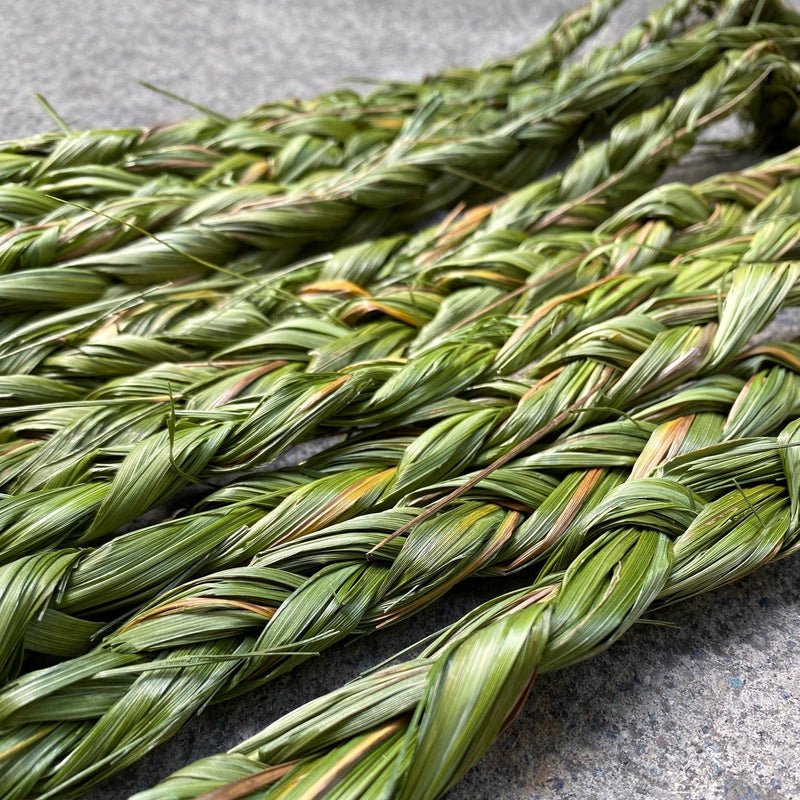
During today's class, a lot of learning opportunities was introduced in the class. If I were to reflect on the activity completed in class today, it was great to learn about using grass like material to learn a pattern like braiding. Gathering appropriate plant materials, such grasses, vines, or bark, is the first step in the process, which taught me to recognize its worth, and value the idea of sustainability. I learned patience and fine motor skills when I began to braid, qualities necessary for grasping practical methods. Braiding has a clear mathematical connection to ideas like measurement, symmetry, and patterns. Pupils must comprehend the braids' structure, frequently repeating patterns or estimating their material requirements based on the length or thickness of the rope. This extends to mathematics and geometry, where the ability to identify and anticipate patterns is essential.
As I interact, the process also promotes cooperation and collaboration, which helped me solve problems when I encountered obstacles like uneven materials or weak braid places. Group work in math classes, where students frequently cooperate to tackle challenging problems or projects, is comparable to this collaborative problem-solving approach. This practical activity offers a concrete means of investigating ratios and scaling, two essential elements of the high school math curriculum in British Columbia. The activity's use of natural materials promotes respect for nature and closely relates to the BC curriculum's emphasis on sustainability and Indigenous ways of knowing.